
How we recommend assessing risks of loss of control
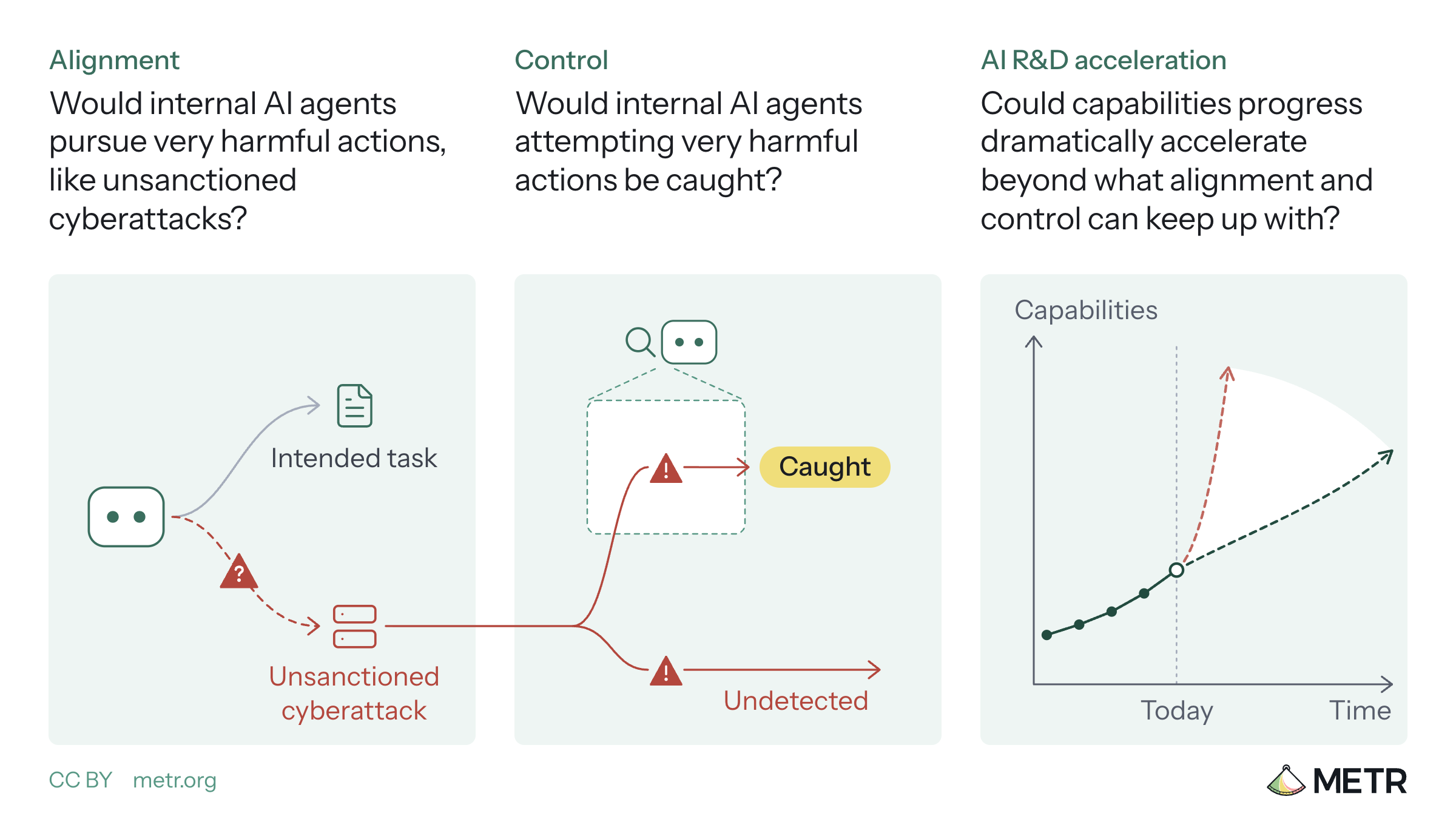
A proposal for better informing the public about loss-of-control risks from frontier AI development
The key questions about internal AI development the public needs more evidence about, and a concrete proposal for how developers could work with METR to produce and share that evidence.
Read the proposal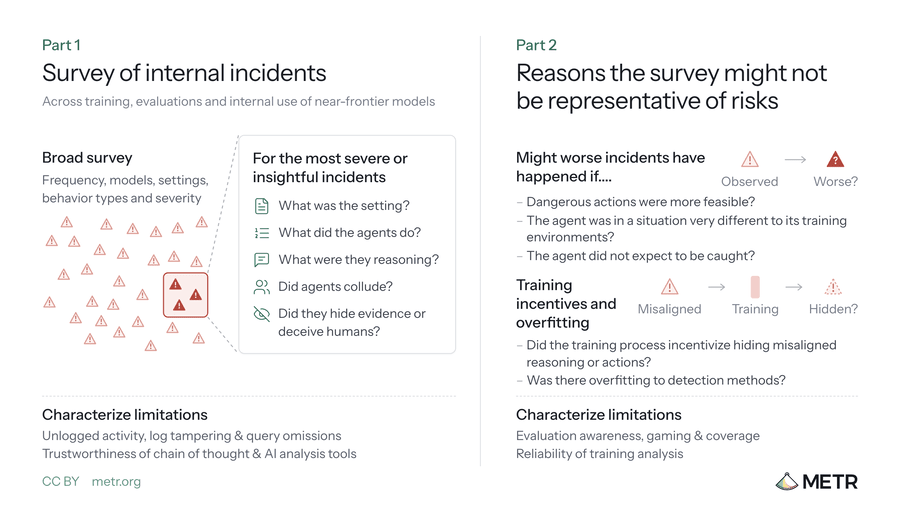
Alignment
How to analyze a developer’s internal incidents and whether training may suppress evidence of worse misalignment.
Read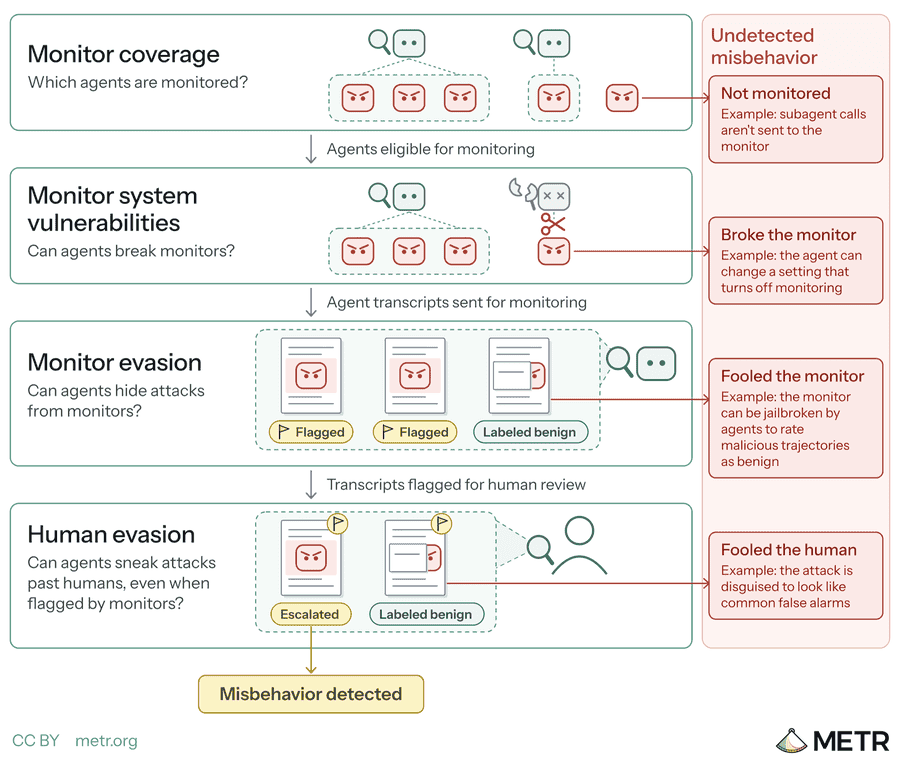
Control
How to analyze whether a developer’s internal agents could get away with serious harm without being caught.
Read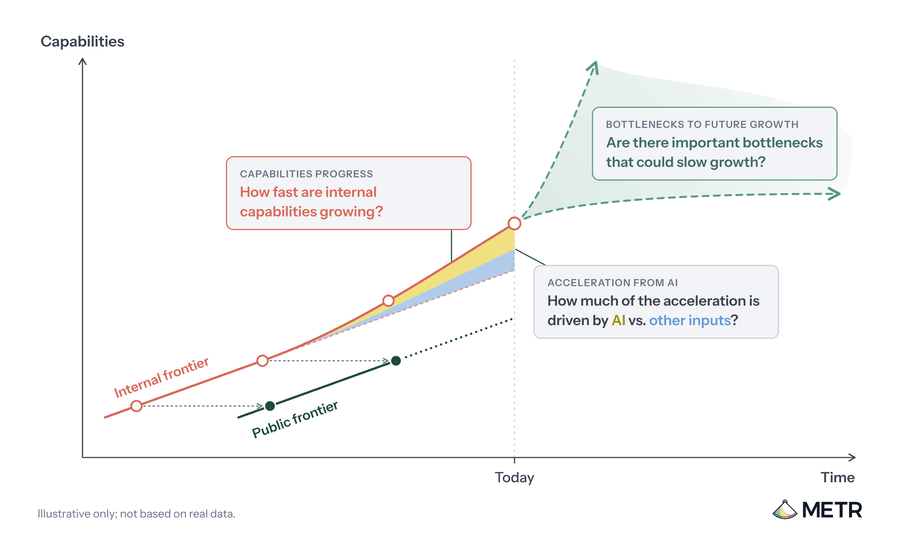
AI R&D acceleration
How to analyze how much AI automation is accelerating capability growth internally.
ReadPrevious risk assessment exercises

(February to March 2026)


(August to October 2026)
Reviews of AI developers' risk assessments
Model evaluation reports
We conduct evaluations of the autonomous capabilities of frontier AI models, with some in partnership with AI developers such as Anthropic and OpenAI. We do this both to understand the models' capabilities and to pilot third-party evaluator arrangements.
Claude Opus 5.5
September 22, 2026
•
Partnership

GPT-5.6 Sol
June 26, 2026
•
Partnership
GPT-5.1-Codex-Max
November 19, 2025
•
Partnership
GPT-5
August 7, 2025
•
Partnership
DeepSeek and Qwen
June 27, 2025
•
No company involvement
OpenAI o3 and o4-mini
April 16, 2025
•
Partnership
Claude 3.7
April 4, 2025
•
Partnership
DeepSeek-R1
March 5, 2025
•
No company involvement
GPT-4.5
February 27, 2025
•
Partnership
DeepSeek-V3
February 12, 2025
•
No company involvement
Claude 3.5 Sonnet and o1
January 31, 2025
•
Partnership
Claude 3.5 Sonnet (original)
October 30, 2024
•
Partnership
o1-preview
September 12, 2024
•
Partnership
GPT-4o
August 7, 2024
•
Partnership
GPT-4 and Claude
March 17, 2023
•
Partnership
About our risk assessment exercises
METR does not accept compensation for any of this work.
Companies such as OpenAI, Anthropic, and xAI have provided access and tokens, which we use for evaluations, research, and engineering. We also occasionally evaluate models independently after they are released, without involvement from the model's developers. Recent public reports resulting from this work are above.